

Introduction
Governmental efficiency may be evaluated in social progress as return on government monetary investment. It could also be realized in operational efficiency in rendering public services. This report does not address monetary investment efficiency. It only addresses the operational efficiency in rendering public services. It demonstrates typical institutional services that can be made efficient. Such an improvement can be applied to many operations in public institutions.
In order to understand some underlying sources of the operational inefficiencies, democratic government models of United Kingdom (UK) and USA are briefly described below to compare with the government model of India. India has based its democracy after the UK model. The democratic model of USA is included because it is the second largest democracy next after India. Whereas UK is a very small country compared to India. Figures below show approximately scaled sizes of the countries.
A few examples of how to improve government efficiencies by eliminating corruption, introducing accountability, and streamlining operations are described. These examples are very few and brief, but they demonstrate the modes of achieving efficiencies.
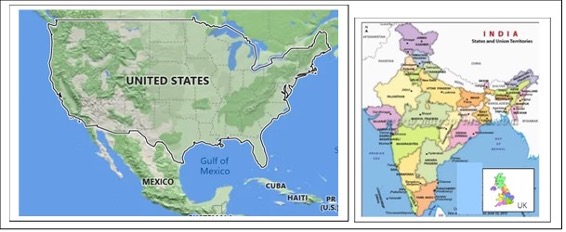
Democratic Models of United Kingdom and India
India has adopted Democratic Model from the UK to create its Constitution. UK does not have a written constitution. It has a few documents of rules of Government. Its Governing philosophy and discipline are developed starting from over 300 years ago. This was an incremental improvement of Government, before, during and after industrialization. Its tradition of political culture has become its working Constitution.
The UK is a small country. India is about 20 times bigger in population and 13.5 times bigger in area than UK. UK has much closer geographic distances than India Generally, English is spoken by almost all people of UK, unlike many languages in India. (See foot note*). The political ruling class in the UK came from a similar background. Therefore, the country and its political sphere is very compact. Any misbehavior of Government officer, such as corruption or bad performance, would be very transparent and noticeable.
(* Foot note: India measures about 2,000 miles from north to south and 1,822 miles from east to west, UK measures 660 miles north to south and about 300 miles east to west. While India has 22 separate official languages, it is home to a total of 121 languages and 270 mother tongues. In UK, 98% of Britons speak English language.)
The government in the UK had to prove its good functioning to the Monarch to obtain more governing concessions. The governing discipline of the Parliament was earned incrementally from the Monarch. Therefore, it was based on the “good behavior of the government” approach. In addition, the tradition of confirming noble titles such as Sir, Knight, Noble, Lord, etc. by the Monarch for peoples’ outstanding achievements in various fields of services also culturally inspires Britons to justify their titles and to remain loyal to their roles in Government. Such long-standing cultural traditions of the Government help maintain a culture of good Government.
Any misbehavior by a government authority becomes visible and felt at a microscale in a small country like UK, while it would be not readily visible or felt on a macroscale in a country like India. It also is true that for a large country if there are many misbehaving people, the psychological effect becomes less annoying. People take it for granted and do not object to it. Slowly over the years, it becomes a common mass behavior. Everybody does it because others are doing it, and they are getting away with it.
India became free seven decades ago, at the beginning of Industrialization. Its new Government was established after its freedom. Therefore, the government functions were developing at the same time industry was developing. At the same time its population has increased on a mega scale. Thus, explosion of population and flux of industrialization required enormous number of services from the government. Government was evolving. It did not have enough time to improve its efficiency to keep pace with the industrialization and increasing population. This is in contrast with the UK Parliamentary Government. UK did not have heavy demand of services due to the size of its population during evolution of efficiency in government.
Government operations across India are done in several languages. The elected representatives come from different economic backgrounds and values. Certain provisions in the Constitution of India described in the next section, which are patterned after the UK political tradition, are prone to power corruption and promoting corrupt leadership in India. This will be more apparent later in the report.
The Parliamentary system of Government that worked well in UK has a very different playground in India. It needed some special variation from its UK model to affect governmental efficiency. The framers of the Constitution of India were trained in UK for their law degrees. They tried to create the UK government structure in the Indian Constitution Document. However, they were not necessarily systems experts to design a fool proof system of the Government. A systems expert will look at the design of Government from all angles of its functions and performances and try to safeguard it against abuses. The framers of the US constitution wrote that there is no guarantee that there will not be a dishonest person in the Government public service position. Therefore, the Government should be designed to safeguard public interests against any abuses by a dishonest, corrupt, or inefficient person in public office.
Presidential Government of the USA
The US Government is made of three branches: executive, legislative, and Judicial. These three branches are independent of each other. There are checks and balances in the Government by these three branches of the Government.
A President is the head of the executive branch. The congress (lower and upper houses) does not decide the election of the President. He is elected by the public. Citizens directly vote for the president.
The members of the Lower House (Congress) are elected by each of the various districts of each state. The members of the Upper house (Congress) are elected by each state in a statewide election. The candidates for congress from each party are elected by registered members of each party. They are not appointed or picked by their party seniors, as they are in India.
The Federal Government Judges are appointed by the President and confirmed by the Upper house of the Congress. Once appointed they cannot be removed by the President. The upper house can remove them by 2/3rd majority votes if they fail to function for the post.
No one branch of the Government can interfere in the function of the other branch. The three branches are separated in its Powers. Removal of the president is possible by two third majority of the upper house of the Congress only for valid misfunction by the president. This two third majority is practically not possible for power play, or other political motives.
In the process of election, the President is not under obligation of the members of the Congress for his election. He cannot be removed from the office by simple majority votes as is the case of the PM in India. The members of the assembly (center or state assembly) have no direct gain of power or position in the executive branch of the government. If any member of the lower or upper house is appointed in the president’s cabinet for his expertise, he must resign the congress position when taking the position in executive branch. He loses his seat in the Assembly/congress. Thus, the executive branch of the President and the Legislative branch of the congress are completely separated. There is no collusion or conflict of interest, or mutual dependency, between these two branches of Government.
The candidates for the positions for the President’s cabinet are nominated by the President. Such appointments need a vigorous confirmation process by the upper house of the congress. The President generally selects/appoints the head of the department by his expertise and relevant experience. He does not have to be elected member of the Congress like in case of Parliamentary system of India. For example, agriculture secretary may be picked from an agricultural university, professor or dean of the college who has fundamental knowledge of the subject. Similarly, cabinet minister for health department could be a doctor or person with substantial medical credentials.
Therefore, there is no power corruption for the positions in the President’s cabinet. Also, if the appointee does not perform well, he can be removed by the President instantly without any potential political consequences from the members of the congress. This induces and retains expert and efficient people in the top positions in center and state Governments. This feature makes the executive branch of the government function efficiently and directly accountable to the President.
The US Government system is not perfect. But it does not have corruption for power position in the government and has direct and effective accountability.
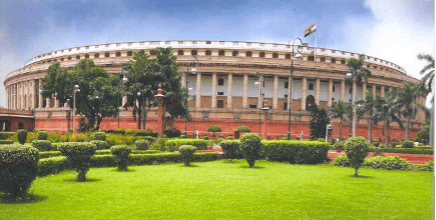
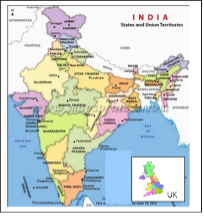
Parliamentary Government of India
The Government of India is structured after the UK Democratic system. It is divided into three branches: Executive, Legislative and Judicial. However, the executive and legislative branches are from the same elected body of Lok Sabha and Raj Sabha (Legislative branch). The Executive branch is a group of designated members (cabinet) of the legislative branch.
The candidates for Lok Sabha and Raj Sabha (Assembly) are nominated by the senior members of each political party for their election to the Assembly. They are not chosen by the people. Thus, the public is given a choice of candidates chosen by party seniors for election.
In a multi-party system, the President invites a designated member of the majority party to form a government. If he has an absolute majority in his party, he does not need support from any other secondary party. If he does not have an absolute majority, then he needs to convince other one or more secondary parties to join hands with his party to form a majority government. The removal of the Prime Minister also becomes easy by a single majority vote.
The PM runs the country with the help of cabinet members appointed by him from the Legislative Assembly. The PM candidate may face pressure from the supporting party to share the cabinet positions with its members in lieu of support and votes from that party. Members of PM’s own party may also put such pressure for their votes. Such pressure could also be applied for the PM to make certain decisions in favor of members of Lok Sabha whose support is needed for the PM to remain in Power. It becomes possible for a very small minority party (third party) to have a PM or CM forced upon a majority party. The majority party agrees to this to retain control of the Government. A PM can be removed prematurely before his term ends by withdrawing such support by the members of the supporting party. The PM has no choice but to keep inefficient or corrupt people in his cabinet due to such provisions. This provision results in Assembly members as a remote control for the PM. Such governments tend to be unstable and cannot make strong decisions that may be opposed by the legislative members for selfish or corrupt reasons.
The election of Dhara Sabha (State Assembly) and a Chief Minister of a State also follows the same procedure by a simple majority of the legislative assembly. Members of Dhara Sabha are appointed (inducted) in the CM’s cabinet for running the state government. The CM also faces pressure from the supporting party and members of Assembly for Cabinet positions. The State Assembly members often act as a remote control for the CM position. These procedures are made part of the Constitution. The Constitution also specifies somewhat similar election procedures for local village, district and taluka Governments.
Governmental Operational Efficiencies
Governmental operational efficiencies (government efficiency) include all services that people could have from the government for their safety, well-being, pleasure, comfort, and progress, etc. These are for public health, education, housing, facilities, transportation, farming, management of public organizations, etc., anything and everything the government could and should do for the people. Government efficiency is in providing timely services to the people, where they need, conveniently, for their present and future wellbeing, at a minimum cost and without abuse of public resources and positions or without breaching public trust.
Governmental efficiencies are vastly affected by corruption, accountability and streamlining operations. This report addresses ways to reduce or eliminate corruption and incorporate effective accountability in management structures and procedures. It also covers transparency and reviews, dual checks, and controls as applicable. Streamlining operations requires detailed analysis of each department. Such details of operations are not included in this report. Individual factors such as staff training, honesty, incentives, laziness, etc. are mentioned in this report.
Various typical areas operations are given as model units to increase efficiency. These applications can be further extended to apply to other similar areas of the government. This report is very limited in the extent and details of its presentations. But it gives a general idea of how things could be changed to make governments more efficient. This report also suggests additional areas of services the government can provide or expand for entities such as cooperative entities, charitable institutions, farming, health industry, etc.
Efficient Leaders (Top-down and Bottom-up Changes)
There are estimated 20,000,000 (2 crore) center and state government employees in India. Each of the Local, State and Center Government has many departments and branches. To make the Government more efficient each of these department branches must be analyzed to study its function and procedures and provide solutions so that it becomes more efficient and foolproof against abuses. It would take a very large effort over a long period of time to make such a big government efficient.
The most logical approach to increase government efficiencies would be to start from top-down and bottom-up. First, increase efficiency at the top by electing competent heads of the governments. They will appoint competent and efficient assistants, cabinet members, to head various departments. The corrected top level of government would trigger improvements and efficiencies on lower levels. The head of the department would set the agenda for lower departments and thus the improvement will gravitate to lower levels. The top level must be corrected and made efficient first.
Promoting efficient, honest, and able leaders from the bottom level of public elections will improve the quality of elected members in the government. Thusly elected efficient and honest leaders, approved, and elected by the public, will gravitate to the upper levels of the Government, and keep working to improve the government functions from bottom up. This would be bottom-up approach to make the government more efficient.
More detailed implications of the top and bottom level corruptions are included later in this report.

Combed Approach to Improve Operations
A humongous government organization must be divided into typical governing subsets. These subsets should be analyzed to develop standard governing models for use in similar organizations. Some basic principles of administration of public institutions (See section 8) could be incorporated in the structures and procedures of organizations. Once a few such models are created with the basic criteria to increase efficiency, they can be applied to other similar organizations.
To analyze government operations, typical units from the bottom up should be analyzed starting with the Village Panchayat and other local public organizations. Next, all operations at the Taluka level should be analyzed. Prepare proposed operational models and manuals of operations at local levels. Similarly, analyze all operations at the district Government level and other public organizations. Prepare operational models for Organizations at District levels. Put these models to try out (debug) for a period of about two to three years only in limited areas. During this period make necessary modifications to the models. After these models are perfected, generalize these operations for all other villages, Taluka and Districts in a state. In the meantime, analyze all state level organizations and refine them and put them to use in one state. Once these operations are perfected for a state, these can be extended in other states. This project may last for a few years. But once it starts it can be accomplished.
This will create a culture of uniform operations at different levels of government in every state. This will also create a feeling of commonality among different areas of the country. This will harmonize operation; people know what to expect from their governments and employees know what to deliver in services to the public.
The center government operations can be analyzed in a systematic way, and typical models can be prepared for general use in multiple departments. This is an incremental way of effecting change in operations to make them efficient in all states and center government. These combing analysis for micro to Macro levels of governments can be very modular in nature. Once a few typical operations are perfected it would become relatively easier to form patterns of models and analyze other units of the government. It would require systems experts working in cooperation with the knowledgeable people of each typical department.
Accountability, Corruption and Efficiency
The following truths about human behavior are cited as pillars of accountability.
“Very few people will work efficiently if they are not held accountable.”
“A corrupt person will exploit opportunity if not checked by people or procedures and if no one is looking.” The right procedures will keep people in check.
“Streamlined processes can increase efficiency and accountability and reduce corruption.
“In a democracy, there is no guarantee that there will not be a dishonest person in a public position. Therefore, government processes should be designed such that they hold up even with dishonest persons in public positions”.
“Nations fail due to uncontrolled abuse of public by the government if there is no strong voice against such abuses”.
Accountability
Efficiency can be increased with more effective accountability in Government operations. Efficiency will decrease if there is no effective accountability. Very few people will work efficiently in public positions if they are not held accountable. Effective accountability can be realized only when there is no conflict of interest between the employee and the head of his operations and if there are consequences or alternate assignments for poor performers.
Corruption
There are many studies made in the past about corruption in India. There is widespread awareness of the existence of corruption. There is a massive overwhelming feeling of hopelessness that this corruption cannot be controlled. And yet we cannot afford to do “nothing”. This is a challenge. This report tries to address that challenge. Hope the public will offer critical review of the approaches outlined in this report, so that they can be refined and applied in practice to improve and perfect the operational efficiencies.
There are two types of corruption:
Power position. Power position corruption is generally at the upper level of institutions. If a power position is given to someone with corrupt practice, it will breed corruption at all levels below it.
Corruption by money or other favors. Money corruption is at all levels. It is spread everywhere in India. It is not only in Government operation, but also in banks, religious and charitable institutions, schools and corporations, public utility operations, licensing operations, Judicial system, Revenue department, everywhere!
If one wants any government service, he must pay bribery to the government employee in charge of that work. In the beginning, after independence, it was not as bad. But after that, more and more places are involved in corrupt practices. It keeps increasing as time goes by. One must pay government staff, not only to get work done, but also so that they do not harass them.
Corruption is self-propagating. If the officer at the upper level wants corrupt money, he instigates his subordinates to take bribery from people who come for Government services and share it with him. If the subordinate does not do it, he is not bringing money for the boss. He will be pushed over to a different area. The corrupt employee has full support from his superiors.
In the beginning, corruption used to be among bureaucrats and government officials as well as larger corporations. It involved large amounts of money. Generally large Government contracts and public construction work were corrupt in the beginning. But today corruption is just about everything. Corruption is universal and expected. If one goes to pick up an application form to apply for utility connections, the person at the office will tell you that they are out of forms and ask you to come back when they get the forms printed. But pay the money and he will find a form for you. The same thing may happen with the bank application or permits for electric connections.
To do business with the Government, one must factor some amount in bidding prices to account for the corruption of officers. Corruption and efficiency are mutually opposing. Corruption goes up, efficiency goes down. Governmental efficiencies can be increased by removing corruption and providing prompt services to the public. Efficiency also can be improved in an operation that is not prone to corruption.
Several models of improving efficiency by eliminating corruption or implementing other measures are described below. There is one model for execution of Public Works Department (PWD) projects. There is a different model to increase the efficiency of the police department. And yet there is a different model for increasing the efficiency of the school system. The models are at macro levels. The models do not specify the operations in detail at micro levels. Once macro level efficiency is accomplished, micro level operations could be accomplished by streamlining processes over a longer period. This can be done by special teams that can analyze typical operations and design them for efficiency. Such an operational model can be then applied to various other government units. The operation improvement can also be made by the employees of the unit with a reward system for any suggestion from the employees.
This is not an all-inclusive report on improvements in efficiency. These applications can be expanded to many parts of the Governments.
Principles for Efficient Government
To increase government efficiency each government function should be examined using a few basic governing principles. These principles can be applied to design government operations and procedures. In the many examples, in this report, for making the government efficient and corruption free, one or more of the following principles are used.
Free and fair elections and unconditional votes
Votes shall not be conditional for any position or favor. Elections for PM or CM and other heads of a governing body shall be without conditions for positions or other favors.
Position shall not be conditional for votes or favors. Votes exchanged for money, positions, and/or favors should be declared unconstitutional.
A third-Party Government should be constitutionally disallowed. Only the majority party should form a government. Any party affiliation should be declared before elections so there is no corrupt horse trading for power positions.
The public should have a right to select competent and honest candidates for general elections, instead of party seniors nominating them.
Public should have a right to send a representative from residents of their own area.
Village Sarpanch: The village people should have the right to determine its own leader such as sarpanch. No government authority should dictate that. Government should give freedom to villages to elect their own leaders.
Impact on public:
Open merit system: All general government appointments should be by open merit system.
Local public body: Acceptance of government appointees for special services such as school-teachers, should require approval from local public body. These positions should be subject to probation period. It affects the lives of many students or people.
Equal rights for public service: All people should have equal rights and opportunity for public services. No one person, agency, or private or government organization should dictate preferences at the cost of rights of other citizens.
Equal rights for public education: All public should have equal rights for education.
Fair policies by government: Public should not become victim of government policies or inefficiencies, including children/students in the schools.
Actions:
Separation of powers to avoid concentration of powers.
Dual controls for checkmate.
Public Involvement: People and the public should be involved in free and fair elections to make democracy successful and efficient. Government should be made accountable to the public by elections.
Time Limit: Every service request from the public should have a time limit for response to the request. A database should be maintained to include the date of service request and when service was provided. Evaluate the department/employee performance by this response period.
It may seem like this will cause additional workload for the department. But if we think about the time lost by not responding or delaying the response for unethical reasons and consider the usefulness of such a service to the public, the increased demand for resources due to such record keeping should be justifiable.
Public reporting:
Online reviews of services by government as well as other public services such as by health facility. In the US there is an online review of all teaching staff in all colleges by students. It helps the colleges to find inefficiency in teaching and to take corrective measures.
Public reporting of corruption: Measures for police corruption reporting should be augmented by requiring the police person to wear a Badge number in big letters and visibly stitched on his shirt. A victim of corruption can report to corruption authority with confidentiality protection. If the same badge number is reported more than 12 times by different victims would be a cause for termination of employment. Similar procedure can be followed for other departments that have frequent public service involvement. For example, a Tax Auditor could also be reported with a similar arrangement.
Random assignment of audit cases. Every case of audit should be randomly assigned to a different auditor. Each case should be reviewed by another randomly assigned auditor unless there is a definite reason for functional advantage.
Potential miss use of a law is not a reason to not do anything about the corruption situations
Accountability:
Accountability improves efficiency. Every person in public service should be held effectively accountable. The public should be involved in periodic confirmation of key service personnel.
Evaluation: There must be accurate evaluation of services to hold employees accountable. These evaluations may be by reviews by public for services they receive, including from private entities such as health care services.
Controls: Proper controls of operations are necessary for efficient services
Simplify and Streamline:
All operations, long or short, should be simplified and streamlined to make them efficient.
Awareness of Service to the People:
Public service: Every government service person should be made aware, continuously, that he/she is working for the people, and he is paid from public funds. Their function is to serve the public without excuse.
Public servants: Integrate training the employees to include public service and courtesy. All VIP perception of government employees that inflate their minds should be modified to make them realize that they are all public servants first. The mentality of government positions above the public should be erased.
Clarity of assignment: All government employees should have clear knowledge of their responsibilities and understanding of their duty to the people. The statement of department functions should be displayed boldly to remind employees of their duties.
Oath of Employment for every Government position – with Honesty, with sincerity and without corruption. Include provision for losing the job if found corrupt. Also include Country before Self, State before self, Village before self in oath.
Votes Exchanged for Money or Position
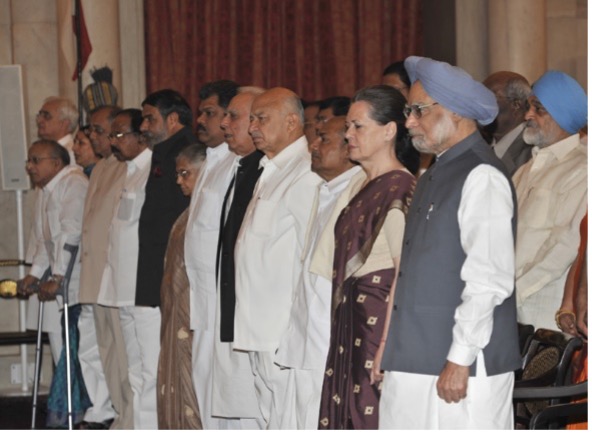
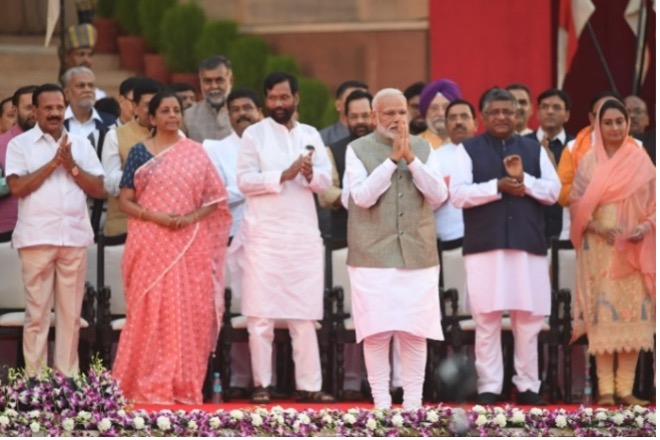
In a democracy, government leaders are elected by votes. The votes shall not be cast in exchange for any power positions, money, and personal favors. Also, a government position shall not be exchanged for votes, money, or other favors. Both votes and government positions must be used only in the best interest of the public.
The constitution of India requires Lok Sabha (Assembly) to elect a Prime Minister. It also requires that the PM appoints his cabinet from among the members of the Lok Sabha. Similarly, at the state level the members of Dhara Sabha (State Assembly) elect the Chief Minister (CM) to head the state. The CM appoints his cabinet members from the State Assembly.
These are very consequential arrangements. A candidate for PM or CM positions could bribe key members of the Assembly for their votes to become PM or CM, in exchange for power positions, money or other favors. Also, the key members of Assembly could make a condition for their support and votes in exchange for a position in the Cabinet. These are conditional promises by electors and elected heads. These positions are mutually dependent on each other. This is bartering the positions for PM, CM, and Ministers of Cabinets for their votes at the top of the center and the state governments. These are the provisions in the Constitution of India. Similar situations exist at the lower levels of local Governments. The public elects a representative to work for the best interest of the public. The elected representative casts his vote for the best interest of himself. These are conflicting situations.
The provision in the constitution results in a few substantial negative consequences.
Unqualified PM or CM: A dishonest corrupt and/or unqualified person from the Assembly can become PM or CM by offering power position to the assembly members for their votes.
Unqualified Cabinet member: Unqualified, corrupt person could acquire a power position in the cabinet of the PM or CM with condition for his support and vote. Such corrupt and/or unqualified appointee could exploit and lower the standard for public service for the whole department.
Deadlock of bad and corrupt people in government: A PM, CM, or his cabinet member may be unqualified for the position. A person appointed for the position of education minister may not have any vision, understanding or interest in the field of education. Agriculture Minister may not have any vision for agriculture. Since the PM or CM and his cabinet people are mutually dependent on each other, the PM or CM cannot remove a person who is not capable or who plays mischief of corruption in his cabinet. The PM or CM also would not be removed because the Assembly members have self-interest in him. Corrupt members elect corrupt heads and corrupt heads appoint corrupt and unqualified people in lead positions.
Tolerance of poor performance and corruption: If the top leader of an organization is corrupt or inefficient, he is tolerant of other inefficient, unqualified, or corrupt staff members in the department. Poor performance and corruption permeate down the depth and width of the government organizations. Everybody justifies such behavior because the other person is doing it. It becomes a mass behavior. The public becomes victims of harassment by elected and appointed public servants.
Abuse of Government resources: Corrupt and unqualified people in leading positions may abuse government resources. People do not get the expected services from the government. Public progress is hindered. The dishonest Assembly members betray the cause of the public for which they are elected. The public suffers for electing dishonest members of the Assembly.
Hinders progress: An unqualified person has no vision for the future of the country. Poor leadership delay good decisions, make bad decisions, no decisions, or make corrupt decisions. Poor leadership affects the progress of the country. It puts the country behind its fair progress for years. It may bring bad results now and for the future of the country for a long time. The losses due to poor leadership are not measurable. It is a loss of mega proportion. Poor leadership delays progress forever. Nothing could be worse than this. The election of PM by Assembly and giving cabinet positions to the people of Assembly works in UK because it is a small country and government is much transparent. Also, they have established good political cultural traditions for over 200 years prior to industrialization. India is very different in its political and government culture.
Removing Power Position Corruption at the Top
As explained before, the PM (or CM) and his cabinet are dependent on each other for their elections and appointments. Corrupt or inefficient person could attract a corrupt or inefficient person. This creates a potential for corruption, inefficiency, and abuse of power at the highest levels of governments. The corrupt top tolerates corruption at the lower level. Corrupt people would not think of ways to eliminate corruption. Therefore, any effort to eliminate corruption and to make Government more efficient must start at the top level of the government.
The procedures to elect a PM or CM and to appoint his cabinet members should be decoupled. Relying upon the ethics of the members does not always assure honesty in the government. Member of the assembly (Lok Sabha or Dhara Sabha) should not benefit from his vote for the head of the Government (CM, PM, and like). He may elect the head, but he must not be allowed to make implicit or explicit conditions to take position in the cabinets of PM or CM in lieu of his vote. Similarly, a PM or CM candidate should not benefit from the power positions he may give to the cabinet members. Therefore, the constitution must be structured such that the conditional votes and conditional power positions are made unconstitutional, not permitted by law, and punishable. Frame the constitution to eliminate the conflict of interests in the election of PM/CM and appointment of his cabinet members with the following provisions.
Assembly shall elect PM or CM without any direct or indirect consideration or benefit from their votes.
The PM and CMs shall nominate the cabinet members from public, from experts available in the respective fields for expected functions. The members of the Assembly approve or disapprove of the members of the cabinets appointed by PM or CM. This arrangement will separate the executive and legislative branches from each other just like in the USA.
If there is a special case of available talent in Assembly and if PM or CM wants to nominate such member to the cabinet position, the member will resign his position from the Assembly to take Cabinet position. The CM of the state will fill the vacated position of the candidate for Cabinet for one or two years. It must be filled from the same precinct. After that time the position will be filled with a new election in the same precinct.
If the election of the head of the government is done by simple majority, the removal should not be done by a simple majority. Provide a better majority such as 55%, 60% votes to remove the PM or CM from the position so it will be difficult to remove the head for mean reasons of party politics.
All power position corruption must be made illegal and unconstitutional. All cabinet portfolios should be assigned to expert visionaries in the field of the subject department and without mutual conflict of interests.
Changing Party or Changing Alliance
One of the tool used is that of alliance of a party. In a multiparty system of election procedure, People get elected under a flag of certain party. After the election is any party does not have absolute majority to form a government the party form alliance to form the government. Which ever alliance has more members will form the government. This provision of alliance after the election is used to bargain power positions in the potential cabinet of the head that will be elected by such alliance of several parties. Candidates / parties promise lucrative position to a smaller party leaders if they join the alliance and help form a government by creating majority. This is one of the source of power position to unworthy member.
If such promise is not kept the party joining the alliance could switch alliance and join a different alliance who may give a better deal, better portfolio, etc. for joining and helping to form a government.
These alliances are decisions of a few at the top of the party who would benefit directly from the deals of alliance. This is not an honest process because people elect the members with certain party affiliation and then after the election the elected member change party alliance to benefit personally from power positions. Here the public is cheated by initially promising one alliance and then change that alliance without people’s approval.
Party alliance should be declared in advance and all parties must adhere to initially declared alliance.
Corruption at the Bottom of Election Process
The candidates for elections of members of Lok Sabha and Dhara Sabha are selected by the senior members of a party. They nominate the candidates, and the Political Party gives them tickets to become their party’s candidates for the Assembly elections. This selection process has a very strong potential for corruption at the candidate nomination level. A candidate may be a “yes man” selected from the party workers who has proven discipline to follow orders of the party seniors. It is easy to see that an intelligent independent minded person may not always appease party seniors so consistently. So, it is likely that an “yes man” becomes a preference for nomination rather than an independent thinker or a strong visionary. A weak senior party person may favor a weak candidate.
A person may also influence the nomination process by giving money to the person of influence who may recommend or nominate him for a ticket to become an Assembly election candidate. These tickets also could be bought by paying money to a contact person or to the party fund.
This is not to say there are no honest people in a party or intelligent people are not picked by the party. But more than likely, either “yes man” or money may become a factor in nomination of a candidate for Assembly elections. A nonqualified person with money may buy his candidacy for Assembly elections.
As a result of such a nomination process citizens have two choices in a two-party contest. Both candidates are chosen by their respective party seniors. They both could be corrupt, incapable, not having public interest in mind, or rich buying tickets to get richer. It is a common belief that all politicians work the same way to exploit their positions. Now people may have two choices, one corrupt man vs the other corrupt person. Or one rich vs another rich person. There is no other choice. This is what the system has provided many times. This is not so exciting a process.
Promoting right leaders from public
As explained above, the candidates for Assembly members are proposed by party seniors instead of by people of his precinct. This is a process where people do not have say in proposing the leaders for elections. The following topics outline the needed corrections in the selection of leaders by the people.
People’s choice
The nomination and election processes must be such that the best and the ablest would gravitate to the top. Therefore, the selection of candidates from the public must be broader and from an open society without influence of money, personal favors or contacts. The current process of nomination or giving a ticket to run in election was justified in the beginning after India’s independence, when there were not enough people with experience of public administration. But now we have so much education, so many people involved, so many experienced people. The process of nomination can be more open and spread out to have able and proven candidates from an open society.
Limiting the tickets to a person picked by the party seniors biases the rights of other people to contest elections and to be able to represent the people of his area. The public is removed from this initial process of nomination of candidates. This is a fundamental encroachment of the rights of the people to participate in their government actively and effectively. The public should have the right to present their own candidate without being dictated to or interference by someone else who may serve self interest in nominations, including corruption. Also, such an opportunity for all persons to participate in their government should not be defused or mitigated by anyone else other than the people of its precinct.
Candidate representing his Area.
Perhaps there could be many candidates from the open society and people can identify their candidate by open voting. This should be used for all candidates for Assembly members. Now any person from the area can tender his candidacy for the election from his area of constituency. Now people have the choice to pick their own candidate.
The current practice of any citizen of India can be a candidate of the Assembly election from anywhere in the country is somewhat illogical. Why would anyone want to elect a person from a different area to represent their area in the Assembly? A person from the area of his residence would better represent the interest of his people. He would be concerned about the people of his area. People of his area would know him if he has done anything good for the people of the area. They would know who will work in the best interest of their people. They would know who is not corrupt, who can be trusted for public positions and who would be the best candidate. People could hold him accountable if he does anything corrupt or contrary to the interest of people. He cannot avoid such accountability by switching constituency.
Correcting the candidate nomination process
The current process of nomination for tickets is apt to corruption. We have heard of candidates buying tickets for candidacy nomination. There must be a better method so that nomination is not done by personal relations or contacts, money, or favors. The public must be involved in the process of nomination.
This could be done by people deciding who they want for their leaders instead of party seniors nominating the candidates for elections. Or it could be dual control, people grading candidates by rank and final approval by party from the candidates with high number of votes. Dual control will tend to promote someone who is liked by the party as well as by most people. This will have less chance of someone deceiving the public by making false promises on mass media.
One way to have people nominate their candidate is by a local election for nomination. This local election may be only for selecting candidates from different parties about four months before the final election. In that local election each party may have multiple candidates. The public may vote for any two or three candidates of the same party by ranking process. The ranking process (see below) will identify the best and most popular candidate out of multiple candidates in a party in a particular precinct. Candidates could be finalized from the local elections for each party. They will be contesting the final election.
Vote by Ranking Process
If there are four candidates, voters will be able to rank the four candidates in order of preference. If a candidate wins an outright absolute majority (50% or more votes) in the first-place rankings, that person wins and becomes a candidate of his party. Yet if nobody wins a majority, the candidate in last place is eliminated and their supporters’ second choices are reallocated to the other candidates. The process continues until a single candidate gets a majority.
The above process may sound complicated. But in this time and age of computers, this process can be followed with quick results without any confusion. This process of electing candidates for Dhara Sabha and Lok Sabha from the public will promote the best and most popular candidates, someone familiar to the people for his good work in his area. This process will eliminate the money corruption in the nomination process in each party. Thus, a corrupt person will be kept out. More popular and capable honest and efficient people, familiar to the public, would go forth to the Assembly to serve the people.
A third-Party Government
If neither of the contesting parties gets a controlling clear majority, two or more parties will join hands to create a majority support for a candidate to negotiate the positions of a PM or a CM. Along with that they also negotiate the positions in the Cabinet of Ministers. This has offered potential for corruption at the top of the governments. It compromises with weak leadership in power positions to lead the various government functions. This is the worst kind of corruption. It affects the efficiency of the government services and the progress of people and country. It victimizes the people.
It does not make any sense to afford the lead position to a person whose party represents only a very small percent of the country’s population. The constitution allows such third-party participation to leverage the power positions. This provides for the Prime Minister to get the majority support. However, it does not reflect the wish of most people. For example, if there are three parties. Party A gets 44% of the Votes. Party B gets 40% Votes. And Party C gets 16% Votes. For reasons of power politics, a candidate whose party only gets 16% of the Votes could become a Prime Minister or a Chief Minister. This arrangement could collect leaders of parties that do not have much approval from people. It could collect a group of very corrupt people from several small local parties that can offer the most undesirable group of people to form a government. This grossly violates the desire of people. 44% of people for sure do not want Party C to offer PM or CM. Many of the 40% people also would not wish a PM or a CM from the party that represents only 16% of Votes. This is clearly a violation of people’s rights. It is violating the trust of the people. The constitution must not allow such deception of most of the population. This is disenfranchising the wish of most people. This manipulation of forming a government for power positions is not the wish of most of the population.
The constitution should be changed such that only a majority party should form a government. No party shall use their position to shorten the wish of the people of the country by corrupt practice of offering positions for votes. Any party affiliation should be declared before elections, so people have a clear picture of how they want to vote. There should not be corrupt horse trading for power positions after the elections.
Issue Voting for Public Voices
The public voice is very important in a democratic government. The public should have a way to let its desires, needs and preferences be known to the people in government who make public policies. Issues like corruption will not be corrected by the governing class of people. Those who personally benefit from the provisions of the constitution will not change those provisions. The members of the Assembly who would lose their chances to head the important positions will not act to eliminate vote for position arrangement in constitution. There may be other such conflicting policies at other levels of the government where the governing body has conflict of interest with the interests of the public. In a Democracy there must be a provision in the constitution that will promote the will of the people. Along with the general election, there could be voting on general issues that affect provisions by government including the Constitution, issues of public interests, which do not affect fundamental human rights. These issues should be for the general population. They should not be for any limited interests of a group of people.
Government Services on Time
People need many services from local Government offices. Many governments service provider abuse their position by expecting bribery for their services. Either at a higher level or at a lower level, the government employees may have the same behavior to linger services to the public unless one is willing to pay bribery for expediting the work. If such bribery is not paid, they will delay services to the public indefinitely. Such harassment of the public for corrupt practice is very common. People get tired of running back and forth and not receiving timely services from government local offices. The worst thing is there is no one who would help. All have a stake in the corrupt process.
There must be a time limit set for providing these services, so people receive government services on time. If the service is not provided on time, they should be able to file a complaint on an online review site. There could be an automatic time record of the date the service was requested and the date when it was provided for all to see on-line. The government officer in charge and his department employee’s performance should be evaluated with this information. If the employee misses the time limit, he should be held accountable for missed time limit with effective consequences; reprimand, pay raise, or suspension depending on frequency of such missed service. Once such policies are made known to employees, it will bring immediate change in the quality and efficiency of government services.
Public Interest Groups and Government Coordinating office.
A democratic government functions best if it receives input from the public. It needs partnership with the public. Such people participation is very common in the USA. There are activists and people groups which provide strong input to the Government by articles, constructive criticism, complaints, suggestions, and discussion forums. These activities stimulate the public to think about their government and its functions and to provide active input.
In India, people criticize their government. They talk about it in their own circles. But there is a lack of official or formal group platforms or offices where they can actively participate or let their needs be known. Establishing such groups at village, taluka or district levels can inspire people to do something actively about their needs and expectations from the government. It gives people a platform where they can go and voice their opinions, needs and complaints for meaningful results. It can help people to organize special public task forces to improve facilities and conditions in their own communities.
An office “Government Coordinating Office” can be created at district level to receive information from activists and provide it to appropriate government departments for further actions. It should also keep an on-line record of resolutions to such requests. This service also could be booked online so that people and special interest groups can register their suggestions or complaints online using a website for respective government services. Such suggestions could also help the government to improve services.
Government Audit
All government spending as well as work should be audited by a very independent audit department. Such auditors should be randomly assigned at the last minute on a revolving basis, so no consecutive audit of a unit is done by the same auditor. It should be random rotation not predictable who will be the next auditor for the task. The audit work should be done in two stages: detailed audit and review of audit. If such assignment is by rotating random personnel, there would be very little chance for corruption. All cases and findings should be recorded on the Tax department database by a database manager. Thus, once on record it will be hard to change the record for any corrupt reasons.
Discretionary powers for a Tax audit should be limited and should involve different department than audit staff. Such discretionary action should be recorded in the database with approval by a secondary authority. This will tend to eliminate bribery from the audit function. Auditors should be held accountable if he missed or passed objectionable quality of work, or if he did not catch or pass the discrepancies without recording it for further actions of recording the deviations.
Concentration of functions/powers
A head of a department can influence the action of his subordinates. If the functions (Powers) to perform several tasks of services are concentrated in one department, the department head may influence the employees of the department by easy cooperation between the co-workers for any corrupt intention. For example, in the Public Works Department (PWD), if a construction of public facility is proposed and the estimate and plans are prepared by a department. The same department is responsible for inviting tenders from the contractors. The same department assigns the contracts, executes the contract, supervises the construction, approves the work done, prepares the bill for making the payments and makes the payments. This is concentration of functions (Powers) to perform various tasks related to the proposed project for spending government/public money. It is easy to abuse such arrangement by the co-workers of this department because they all work under one head of the department.
Division of Powers to Reduce Corruption
If all the functions to construct a public facility are assigned to one department, the work may not be done properly, and the contractor still can get paid for work that may not be done. Or the work may be done only of inferior quality and the payment for work could be approved. This is possible because it is easy to manipulate people working in the same department, especially if there is no one else checking or watching the work. The concentration of powers can invite corruption.
The following description is given as an example of how powers could be separated to decentralize functions. Processes like the following could be created and evolved to create corruption free operations.
In any construction project, there are a few stages.
Group A:
Prepare proposals and estimates.
Invite bids and offer the contract to the best bidder.
Group B:
Execute the construction.
Prepare the bill of payments.
Group C:
Check and Approve the work, quality, and amount of work.
Audit the work done.
Group D:
Make payments.
The department function organization should be such that Group A will perform task 1) and 2) above. Group B will perform function 3) and 4). And Group C will perform tasks 5) and 6). Group D, the accounting department, will make the final payments after all other groups have submitted satisfactory reports. The heads of these Groups A, B, C and D must be in different departments with divided responsibilities. A carefully crafted accounting department would be a key to assuring the work is done right and payments are made in accordance with the work. Accounting is not only money account but also quantity and quality of work. Now there are four departments involved in executing the function that otherwise was performed by people in the same department. This will make it difficult if not impossible to exploit or manipulate any transaction that is unfair to the project. Most importantly, create a quality control process to monitor that he work is done to the highest quality without compromise. Keep accurate records of all data from quality control processes. Currently there are warranties for various jobs. If any structure or highways failed before a limit of period, the contractor is required to redo the work at his expense. However, this is after the fact process, some years later, if the contractor is still around. Quality control process stands a chance to assure the work is done right in the first place.
Because of the involvement of multiple departments in performing the functions, the process may slow down. But in these days of computer applications there is no time lost in inter department communication to trigger the next operation. Instant Electronic Communications using computers can speed up inter department processing. The process should require time element restrictions in processing the next actions with consequences if a function is not carried out in prescribed time limit.
Corrupt or Incapable People in Public Positions
There are many important direct public service positions in the government, such as a Police Commissioner, a Mamlatdar, a Collector, etc.
Let us look at the Police Commissioner position. A police commissioner for a Municipal Corporation is appointed at the state level. Any position that has good potential for income from corruption costs money to the one who seeks the position. Such a position can be bought by paying perpetual annual amount. A commissioner of Police is one such position of corruption by exploitation of public. Such a position is given to someone who will give a major amount to the officer at state level who appoints him. The commissioner collects illegal money by relaxing the police function for businesses and criminals. He is implicitly required to share his fortune with the one who posted him for the position. If he does not, he will be moved out from the lucrative position and someone who brings large corrupt money would be appointed in his place. So, the commissioner continues to harvest his illegal corrupt income from the various resources. He is permissive and encourages corrupt practices of his subordinate staff. His subordinates also share illegal money with him.
Corruption in the police department extends to all levels of the organization. Mass behavior of tolerating such practice emerges. The public is exploited. Corruption strives. There is nothing people can do to correct the situation. Again, there may be very sincere and honest people in police departments across the country, but in very low numbers. Chances are those honest people may not survive the corrupt system. Similarly, a mamlatdar’s position also earns corrupt money. If he is not using his corrupt practice, he will be pushed out to a remote area where there is not much scope for corruption. A lucrative area is always in demand for such corrupt posting. A lucrative area position also costs more money for the appointee.
Accountability to Check Corruption in Police Organization
A public servant is held accountable in two ways. An honest and efficient supervisor can hold his subordinate accountable for assigned work. If a supervisor is lazy, corrupt or not motivated for public service it is less likely he will demand good services from his staff. The other way is holding him accountable to the public. Accountable to the public can be done in two ways: a) Online reviews or complaints of poor service or corruption, b) Confirmation by public vote.
For a position of major and extensive public service, such as a police commissioner, an appointment is be made by the state government office by open merit system. But after the first or second year of posting, the public of his service area should be asked to confirm or reject the position by simple voting. Then, after every two years the person should be reconfirmed by public votes. This is how he would be held accountable to the public. If he is competent and honest in his duty, he will be confirmed by the people to continue his job in his position. If he is corrupt, dishonest, or incompetent, the public will vote him out. He can go back to his previous position. This will be a controlling provision for the commissioner. He cannot afford to pay large corrupt money to whoever appointed him because his position is not guaranteed to last for a long time. The position is only guaranteed until he is confirmed again. He cannot promise corrupt money to whoever appointed him. He will not have pressure from the top to deliver money. He will not push his subordinates to bring more corrupt money. He will execute the chartered function more efficiently and honestly. The public will benefit from such a process of confirming. Operations in the police departments will be self-correcting, efficient, less abusing to the public, less or no corruption. This also will promote people fairly for the job without consideration to corrupt money.
If a non-efficient or corrupt person is appointed, he will be voted out next year. If for some reason this becomes a yearly occurrence, the appointment procedure could be faulty. It may involve further corruption of smaller amounts. If such an appointment becomes yearly, the procedure should be changed to a dual control system for appointment; 1) appointed by credentials, merit system of some kind, by the government, and 2) approval by a local public body like a Citizens Civil Action Committee (CCAC).
For some positions, different from the Commissioner, if such confirmation is not required regularly, there must be a provision in the regulations that can occasionally initiate such confirmation by public as needed basis. The public can file a petition through a Citizens Civil Action Committee for such confirmation if operating conditions require it. Positions that provide direct services to people, such as Mamlatdar, Collector, etc. could also be confirmed by people, if required, to have some control by public on the population-wide function of these positions. Also, if such positions are assigned “on-line public reviews” it will record his performance on-line that could be monitored by an independent government agency and visible to public. To protect abuse of on-line reviews, the review would show only level of service without details of accusations. If a threshold for negative reaches a certain threshold, the CCAC will initiate recommendations for corrective actions.
Corruption in Police Department
The police department is involved in many situations of crimes and violations of laws. There may be many honest police officers who execute their duties faithfully. But there are many others who break laws. The department that has responsibility to enforce laws may break laws in maximum proportion.
The following limited list is given to stimulate discussion and suggestions from the public. Some of these suggestions may already be in practice. And some may have to be refined.
Some police personnel systematically participate in organized crimes.
This is an organized activity, and the Police Commissioner should know about it. If he does not know, or looks the other way, then he will be replaced by rejecting his confirmation.
Dual Control: There should be a Citizens Civil Action Committee that can watch the community affairs and provide input in the system. People involvement in public affairs is the best way in democratic governance. It creates a sense of responsibility and awareness for public service with social responsibility.
There are some corrupt police people who will work against the police department by tipping the criminals in cases where the police authority may be trying to trap the criminals, catch them red handed, or arrest them. Police may help criminals to escape police authorities.
Need police department to monitor closely any confidential activity.
Impose very high punishment, losing job, jail, and fines for providing information to the criminals.
Post high rewards for someone who catches bad police who tip off the criminals.
Police may beat poor people. For example, peddlers, roadside shops, and laborers etc. Police take their money as bribes, so they do not get beaten.
Police should not have authority to beat citizens. There should be laws against beating such people.
Use of large size badge numbers worn visible to the public can be reported to CCAC for abusers of police duties.
Separation of Powers: There should not be concentration of Powers. Police enforce laws. Police should not be allowed to act as a Judge and Jury to decide crime and pass on punishment. That is the work of a Judge and the Jury in the court.
Incidences of mistreating a SC, ST person can be illegally disposed of by taking corrupt money.
SC ST should be educated to go to the court and file a complaint. Such filing should be free. The government should provide complain offices for such cases.
Wrong accusation of someone mistreating SC, ST, OBC class people
A Police officer can file a complaint, but he will have to prove it by hard evidence for such accusation in the court. If the officer is found harassing the public, he should be reprimanded by effective means.
Police may not book a FIR against a person who pays money to the police.
Have alternate place to file FIR, such as courts, or even paid private service for reasonable flat fees.
Consider immunity for such reporters.
Police filing a wrong FIR against an innocent person to extort money.
Concentration of powers make people abuse the power. Police should have power to file a FIR. Once filed only the court should have the power to drop the charge after the case is processed in court. Police should not be allowed to drop the FIR or fill the function of a court to judge the FIR and its punishment.
If a Police Officer threaten the citizen with a FIR and demands money for not filing it, the victims should have option to report such event. Such events could be documented on the Government System. Frequency of such event could identify abusers.
The logbook of a police officer should be deposited with a Police Action Audit department to account for every page of the book. Audit person should be held accountable for not reporting irregularities to authorities.
Police arrest innocent people and put them in jail without hard proof of a crime. Police and courts collect money from a rich victim by blackmailing him.
Every person should have a chance in the court. Every person is innocent till he is proven guilty. With very rare exceptions in high crimes, no person can be held in jail unless he is dangerous to the public, or country. Any civil crime should have proper court procedures followed before a judge rules the case. Innocents go free. Guilty may be fined or jailed as the law provides. A Judge must have hard proof and only after a case is processed through the court, a punishment can be passed on.
A person may be dangerous for public safety so he should be kept in jail. This premise should not be applied loosely or arbitrarily for any citizen with potential to pay bribery.
Separation of powers: Police make sure people follow the law. Police cannot act as a judge and give punishment. These two powers should be in two different places: police department and courts. Police can only book complaints, and the government must prove the complaint to hold anyone guilty of violation of cited law.
Police officials take a fixed amount of money regularly from the shopkeepers in order to let their illegal shop run or letting them encroach on the public footpath thereby causing problems to the general public.
Open for suggestions. A government is as good as its population. If people take responsibility instead of accusing the government for not doing its part, many irregularities can be resolved by filing formal public complaints to proper authority in the city – corporation office or police department.
Citizens Civil Action Committee: CCAC can keep such records and recommend to the Police enforcement authority.
Bribery for police location transfers.
The Location Transfer period should be fixed. Any exception should be authorized from high level with stringent conditions. Location transfer struggle is more for lucrative locations that has more chance for public corruption. With all the measures to stop police corruption, such location transfer may diminish its importance for corruption. Then such transfers requests may be only for family circumstances. If there is no corruption, there is no other need for transfers or to prevent transfers. Such transfers may be made based on public review data for a public servant/officer.
Traffic violation stops.
Provide credit points towards pay raises and promotions for another policeman who will report such events. Such rewards will be only after such complaints are proven by numbers of incidences or other hard proofs. A person should be charged after he accumulates a set minimum number of complaints by different persons, so that there is no chance of faulty accusation by ill-intentioned colleague.
Bribery for appointments and promotions.
All appointments and promotions should be by public posting on competitive basis and merit system. This is possible and convenient to do it online.
High level crimes such as ministers and associates are covered up by bribes to police.
Anyone who reports such crimes and bribery should be protected by privacy and given some monetary incentive.
A police commissioner should be evaluated based on how he disciplines his department. Such an evaluation should be made public “on-line” and made available to the public for his periodic confirmation process.
Justice System – Corruption
If there is corruption in Justice it conflicts its purpose. Corruption creates a place of no justice. Out of all the different government functions for public, Justice Department (Courts) should never be the places for corruption.
Some court cases at the Taluka level are handled by Mamlatdar. If Mamlatdar becomes a corruption center, that position should be open for public confirmation every two years. If the public decides not to confirm him, he should be transferred to a different location. If he is bounced from more than two places, he should be demoted back to his previous position before being promoted as Mamlatdar.
Limit Date Extensions and Limit Time for a Case: There should be a time limit for all court cases. Also, there should be a limit to how many extensions a court grants to a person in his court case. Extensions can be granted within the preset time limit. It is recognized that many of these cases are stretched to harass the opponents, to create more revenue for legal professionals or to create opportunities for corruption. There may be cases that need more time to collect evidence or other data and information for justice. If that is the case, then time limit extension may be justified upon special recorded request. If such a request proves to be untrue or a hollow excuse, the lawyer should be held accountable.
Many trivia cases that do not need supporting information should be identified and finished on time. Court cases should be classified as Category A < 4 Months, Category < 8 Months, Category C < 12 Months. If there is a Jury to be involved, then it may be Category D < 18 Months. Such time limits can be set with the advice from ex-judicial people experienced in judicial processing of court cases. Once the case starts, it should finish within a pre-set time limit and within the maximum extension allowed. Such numbers of extensions could be different for different categories of cases. Justice delayed is justice denied for that time. This will make courts and Judicial system more efficient and minimize corruption.
There should be controls or an audit system for courts. Online reviews of court cases and public complaints could help the courts with their performance and how the public values their work. Online records should be kept for all court cases and how they were concluded, based on principles of justice. The audit may review on-line reviews and complaints and scrutinize them. From such a review he may be able to put valid complaints in permanent records viewable to the public. He may also audit how many cases were concluded in each period and if there were any delays in case conclusions, violation of date extensions, and case time span. Such audits should be by revolving staff and with second scrutiny. They should all enter their processing and findings on database record. Judges should be held accountable for wrong justice or delay in justice. Auditors should be held accountable for missed audits or cover up.
Education in Public Primary and High Schools
Inefficient End Results
Public Primary and High schools operate at a very low efficiency. This is true especially in rural communities. For example, consider the following facts.
High school principals complain that students coming from Government Primary schools to High Schools do not know simple arithmetic and reading. This is especially true in rural areas. The teachers may be relaxed in teaching in primary schools. There is no effective measures and consequences for poor performance of teachers.
From the analyses of SSC results in Gujarat for years 2018, 2019 and 2020, SSC students’ failure rate is 35% to 39%. About 30% of total students quit school altogether after failing SSC. There are 10,00,000 students appearing in SSC examinations. 3,00,000 students who permanently quit SSC after failing the board examination once or twice. This depicts the inefficiency of the education system.
12th science board examination results are likewise. Good students go to science study after SSC board examinations. Every year out of 1,25,000 total science students in Gujarat, 28% fail 12th board examination, of which 21% (26,250) quit science study all together. HSC board examination results for a student are found to be on average 18% lower than his SSC or BSc results. This reflects unfair HSC science syllabus and examinations.
All students’ average score of marks for the SSC and HSC Science board examinations are around 45% to 50% with majority of students obtaining below 50% marks. This also shows poor efficiency in high school teaching.
Such quantitative and qualitative failure rate (inefficiencies) will not be tolerated for any other production facility of industrial goods. But we tolerate it in schools where the students should be the most precious social and national assets. This is not an efficient education system.
Characters of Current Education System
The public education system in India is carried over from the times of the foreigner rulers. There are many advances in Education in last several decades. There are some striking characteristics of the system carried over from older times as follows.
Minimum expectations: 33% minimum passing standard and very low average marks for SSC and HSC results, shown in the previous section, depict the mindset of teachers, students, parents and government officials. People get used to such minimum expectation and failure events from youthful years of high school life. This shape the characters of our young generation. It creates a culture of minimum expectations. People get used to the culture of providing or receiving minimum services from public servants in Governments also.b) Lack of evaluating measures for performance of teachers and schools. The percentage of students passed in a class is not an accurate measure for effective teaching. Average marks obtained by all students in the entire class should be used for teacher performance.c) Lack of effective accountability for teachers. Performance deteriorates if there is no effective accountability.d) Lack of effective controls on schools and teachers. There are no effective corrective actions to correct the situation of poorly performing schools and teachers.e) Lack of uniform requirement for hiring practices for teachers. A merit system should be used with local management dual controls for teacher performance and to hold him accountable. There must be definite consequences for poor performance.f) Corrupt practices in hiring, and other decision-making processes.
g) Unfair board examinations in high schools discourage many students from continuing further education.
Effective Accountability
In some states there is a merit system for hiring teachers. Teachers are paid very well to attract staff of high potential. Even then, the quality of education is poor because there is no effective accountability for teachers. There is no evaluation system for teacher or student performance at appropriate time intervals by independent testing. The SSC and HSC board examination only tests students for traditional reasons. But these tests are not used to determine teacher performance. There are no good performance criteria for teachers. Teachers are used to minimum expectations to pass their students. Many teachers will do honest work if there is no one to hold them effectively accountable. But there may be some who need more controls or guidance.
Teacher Evaluation
A teacher should be evaluated annually for his performance by average marks his students obtain in a standardized examination. All schools and all communities are not uniform. So, there should be some standard of normalizing average marks factors for a school depending on student factors, including background of parents, living conditions, financial conditions, commuting, school facility, etc. These situations can be used to quantify the parameters and assign the threshold marks for each school or class. Teacher pay raises may be tied to his quantitative and subjective performance review. In addition, if a teacher is appraised as nonperformer appropriate actions should be recommended by the local school committee and executed by the Government. Evaluation by students could also be factors for high schools.
Merit System
Teachers in public school are appointed by merit system in some states. However, every potential teacher who scores high in the merit system may not be necessarily a good teacher. It is possible that such teacher posting to teach could be faulty. Teacher appointments are permanent positions. Once appointed, ordinarily he cannot be removed. If a bad teacher is appointed, either by merit system or by corruption, students become victims for many years. There must be some dual control for such appointments.
He may be appointed by the Government, but the local school body should have freedom to accept or reject him if he is not the right person for the job.
All such positions should be on probation so that after one or two years if his work is not satisfactory, he can be sent back.
There must be a way to give the teacher a reason to continue working properly years after years. If he does not work right, he should be given some notice or transfer him to a different school and if the same complains persists he could be sent home.
Students should not become victims of government limitation in teacher quality and lack of administrative measures.
This process of teacher hiring will increase efficiency of the hiring process. A similar process should be adopted for the appointment of a principal.
Controls on Public Schools
Government controls:
There are school supervisors for government primary schools. District Education Officer also supervises high schools. They come from seniority or merit appointments from teaching staff. Once appointed they are set for retirement. There is no accountability as far as their appropriate actions on nonperforming teachers. They may not want to create unnecessary headaches or problems by taking actions on nonperforming teachers. They fail to take responsibility for assuring good performance from teaching staff. The person in charge of this task should invent methods of evaluating his staff and acting on nonperformers. Just depending on government policies and not making improvements on their assignments is not an efficient staff. Teachers, Principals, school supervisors and government should all share the responsibility of teaching efficiency.
With the above shortcomings on school supervisors, there must be evaluation of these school supervisors. Such evaluation should be by a Taluka and District level body of several persons in the education system, such as Parents, School Teachers, Local school committees and citizens. If a supervisor is found not efficient in taking actions he should be judged from the evaluations and sent back to where he was promoted from. Inefficient people should not be in charge of such important functions for society even if they are seniors in their job history or by length of employment.
Dual Controls:
Government in Education system has limitations to be present everywhere. Government can put efficient merit system for teacher qualification before hiring them in the system. Once hired it is almost impossible to remove him if his performance changes. Even a mentally unstable teacher cannot be removed. Supervising Government officers may not want to take responsibility for such situations. Single point control, by the government, of all aspects of teachers, always, may not be efficient. Therefore, for public schools there must be dual control of the operations, Government and Public. Public control will create effective accountability. If the government system fails, the public control will assure the students do not become victims of Government arrangements.
Government operations for public schools’ education system is in place. Public controls could be created by
Parents of the students
Recognized and responsible public figures of local communities
Self-monitoring system such as public teachers of higher grades (study year) evaluating the incoming students from lower classes/grades. For example, primary school students can be evaluated by high schools.
A 9 or 11-member school council elected at a Taluka level can also be a public control body.
Students evaluate teachers by on line REVIEWS and provide input to the controlling bodies. The last (5th) control can be possible in High Schools and colleges. High School and College students can honestly and sincerely evaluate their teachers and can suggest improvements.
Online Reviews of institutions and teachers by students.
There could be a combination of the above people to form a Public Control body.
Mandatory Actions on Teaching Inefficiency:
The data of input from the public control body about teacher evaluation could be used by Government and Public controlling bodies for appropriate actions including, changes, appreciation, recognition or reprimand. All such evaluations of teachers should have some positive and negative consequences.
The school and teacher efficiency evaluations should consider many factors such as the average scores of students in a class, student potentials – quality, parents’ education, community factors, school facility, student commuting distances, etc. with assigned weights for these factors. These are only a few ideas. There may be better ideas for doing these tasks. This is one way of quantifying the evaluation of quality of education.
Dual control of schools will bring out the problems from ground up and take them to the Government Control units where they will have to take actions on the valid points of the dual control body. These provisions could eliminate inefficiency in primary and high school systems.
Potential for Corruption
Primary and middle school teachers are paid high salaries in government schools. There is almost no accountability, and a relaxed work environment. This creates a high demand for theseteaching jobs. These conditions of high salary, easy work and very little accountability led to low efficiency and at the same time corruption wherever potential for corruption exists. Sometimes candidates for teachers’ positions are willing to pay high amounts in corruption to get government teaching jobs.
The low efficiency and low quality of education in public schools has created demand for private schools. Private schools are profit motive schools. They charge enormous amounts from the students. People are willing to pay exceptionally high prices for education in primary and high school education. The same conditions exist for college education. A lot of private colleges have sprung up for technical and professional education. Government Colleges work at low efficiency.
The state governments have given soft hearts to private schools, perhaps in response to corrupt practice for private schools. Government invents ways to help private schools by granting liberal permits and using government funds to help directly or indirectly those who may attend private schools – government at its best to create ways to promote corruption at top levels.
Semi-private college and Donations for admissions
Some Government colleges are also converted to semi-private colleges with conditions convenient to groups of local school management. Government authorities give such permission potentially for consideration. They admit only a limited number of students with high percent marks without charging donations for admission. Bulk of students are charged high donations for admissions. They still must pay annual fees. Students whose parents have better financial, living accommodation, private tuition, and conveniences of life obtain relatively better percentage of marks in high school board examinations. They have the advantage of admission without donation. Students from poor families with financial hardships may not obtain as high percentage marks. So, in the admission criteria of high percentage admitted without donation, and others pay high donations, students from poor families are victims of such privatization scheme by the government. This money-making privatization of colleges has some motive and potential for corruption.
The admission process should consider financial conditions in the free admission process. If high percentage is criteria, then there should be lower percentage for poor students for admission criteria. Suppose 60% is the criteria for admission to one of these schools, then for poor students it should be 50% or 55% for preference over 60% for the students from rich families. Or abolish the donation system in public or semi-public schools/colleges. Government policies that encourage privatizing primary and high schools at the cost of quality of teaching in public schools are bad for poor students in public schools. There are government policies for SC, ST, OBC class of students. The government policies do not consider financial conditions for donations in the admission process. Government does give some loans or discriminate scholarships to students.
Deterioration of Quality of Education in Public Schools
Because operational efficiency in Government schools is low, private schools get a boost from flux of students whose parents can pay the price for better-quality education. Also, many Governments differ or delay hiring new teachers in public schools for years, thus encouraging or favoring private schools. We hear stories of Government colleges that Professors do not show up to teach their classes. So, students go to private tuition classes to learn the subject and appear at the Government schools’ examinations to get their degrees. This is a waste of government resources without efficiency.
The arrangements of private tuition classes for all students, primary, middle schools and for colleges has become very common everywhere. This is a result of the poor quality of education in the public schools and government colleges.
Essentially low teaching efficiency in public schools has caused high demand for private schools and private tuition classes for those who have the money. Private education has more money pressure in technical and professional schools. All this is happening because there is a high demand for good education. Rich people send their children to private schools for technical and professional education at a very high cost. It all points to low Government efficiency in public schools and colleges.
Poor education in public schools has created more private schools. This results in more teachers in private schools. Therefore, there are fewer teachers positions in public schools. With higher salaries and less positions available in the public school system, there is pressure to find government jobs in public schools. This could create potential for corruption for jobs in public schools.
In the education system, private financial interests have a very controlling influence on Government policies. Government decision makers in education departments have very high potential for corrupt money from private school systems. This makes it complicated to make the Government education system more efficient. High potential for corruption exists for high paying government teaching jobs in schools and colleges.
Expanding Public Schools
Once the efficiency of public-school education is improved, more students would want to attend the public schools rather than expensive private schools. People may prefer not to spend money in private schools for the same education they can get for their children in public schools. Now the pressure on private schools will reduce. Poor students would have the same quality of education that children of rich families have. There will be less discrimination among “haves” and “not haves” in the field of education. “Education as a business opportunity” mentality will be softened.
Supply and Demand of Teachers
Expanding public schools will require more teachers. That means bigger Government budgets for education. It is foreseeable that with improving public school education, some private schools may be closing. Many of those teachers from private schools will be available for public schools. Government can hire them through the merit system. At the same time Government will need to adjust the pay scales of public education system for newly hired teachers so that good quality education can be expanded, afforded and made available to many more students in public schools.
Currently there are many teachers working in private schools. Many of them are working at a very low pay compared to the Government teacher positions. For examples a Teacher on Government school is paid Rs. 70,000 per month. A private school teacher may be paid anywhere from Rs. 10000 to 20000 for a comparable job. To balance out the demand the pay scale for the new government teachers can be revised substantially to make the government positions available to many more teachers without the treasury clearing out bottoms. This could be a major overhaul of the education system. This will make more teachers available for government positions with expansion of public schools with higher teaching efficiency and less corruption.
Eliminating Corruption in the Education System
To Improve efficiency in public schools the following actions are suggested:
In public schools, there is better pay, very little accountability, no performance reviews, and a very relaxed environment attracts poor quality people. It invites people to spend corrupt money to get jobs in public schools. As a result, less efficient but rich people could find their ways for teaching jobs in public schools and efficient but not so rich people will be left out. Students and their education suffer. Here it is reminded that scoring high in merit system does not guarantee a good quality teacher, for a high scoring teacher could be not sincere towards students and may be looking for relaxed time. In Hindi or Gujarati, it is called “Kamchori”.
A merit system with dual control for hiring will help corruption situation.
Provisions of effective accountability with corrective steps for poor performance would give poor performer teachers to continue improving their performance.
Expanding public schools and eliminating disparity of public schools and private schools in pay as well as quality of education will lessen pressures on private schools and more jobs in public schools leads less pressure on people to get in teaching in public schools.
Currently, many private schools pay less salary for teachers and have better quality of education compared to public schools pay substantially more salary to teachers and have poor quality of education. To expand public school, need more teachers that increases the opportunities to be hired in public schools. There will be reduced pressure to get teaching jobs in Government schools. Therefore, less corruption to get teaching job in public schools.
There will be less influence of money by moderation in pay scales to envelop more students under public education and more teachers in public school system, probation period for new teachers, and an online school and teacher review system will increase teaching efficiency and reduce the potential for corruption if not eliminate it. An online review of schools and teachers could result in substantial improvement in efficiency and reduction in corruption in schools and colleges.
The suggestions in the foregoing topics are raw suggestions, meaning they need to be discussed and selected based on viability of application depending on the area of schools. The area could have an educated community, or a rural community with very little education. Different public control modes would be used in such variations. In any case systems need to be designed locally for the fields of applications.
Some of these steps to make the education system more efficient may sound more involved. But essential and important tasks, however difficult they may sound, should not be postponed because they are difficult. Right thing should be done no matter how inconvenient.
Faulty Policy for Village Panchayats
The Center Government has specified the structure of Village Panchayat body. Generally, in a small village 7 to 9 members are elected to form a Village Panchayat. There may be typically two teams contesting the election every five years. Each of these teams are formed by close associates or friends who will be loyal to each other, so they cooperate with each other.
A sarpanch (Lead person of the Panchayat) and a deputy sarpanch are nominated by this team and elected by the village people at large. The Centre Government has specified the sarpanch to be from a specific caste (SC, ST, OBC, Woman, general – 5 classes). So, it rotates in cyclic order every five years. Center Government dictates it in the constitution. This is done with the intention of promoting equality among classes of the population. Generally, it is hard to find a capable sarpanch candidate from these groups in every village and in every election year. So as a result, a token person is nominated to satisfy government requirement and a different (other than SC ST OBC woman) person is nominated for deputy sarpanch who then runs the panchayat. Such manipulation is permitted. Thus, a SC person will lead the Panchayat at every 25 years interval. Then an ST person comes. Then OBC will come and then a woman and then someone from open general class will come to serve as the head of the Panchayat. So, each group gets a chance to head the panchayat every 25 years. It does not make sense how inducing one person out of hundreds in one underprivileged class, every 25 years, to lead the village will create equality for that class. It seems like this provision is made initially to appease the voting bank. What is worse is the person thus elected may not have the qualification to lead the village. All capable people would be set aside, and a very ignorant and incapable person could be given the charge of leading the village. This is a nondemocratic provision in the constitution of India. It is very inefficient to put unqualified persons in charge of a village for almost 25 years. Besides, it encroaches the rights of all other village people to lead and serve the village as the village may need, want and desire. The center government is doing many other things to create equality. Rotating the position of Sarpanch may make feel like they are equal but at the cost of village progress. This complicates the process and creates disadvantages for the villages. This is a disservice by the government to the people of hundreds of thousands of villages. The government should give a better model for Village Panchayat with some freedom of exceptional choices. Or let the villages create their own Panchayat structure and procedures to carry out their own needs, functions, and duties. Center should not provide guidance to villagers in such a vague way.
Wastage of Resources in Panchayats
When a road is being built in a rural area, and the contractor is not building it properly, he just fills dirt and some gravel at the top and puts a thin layer of tar. People go by. They see it is not being done right. They wonder and go away. It was not their road. Government money. They did not care. Roadway will wash away in monsoon. This happened for many years. The same thing happens in a village for other works on a smaller scale.
If a panchayat is doing some work. No one else knows how much money is received for the work. No one else knows the exact scope of the work. Panchayat receives the money from the Government. It is supposed to be spent on the proposed project. They do it. Some money is spent. No one knows the detailed scope of the work except one or two members of the Panchayat. They do mili-bhagat (cooperation with devotion for corrupt practice) with the government agent and the contractor. They may spend some of the funds and declare work is finished. They share some of the money with participants in execution of work. Books are closed. People see that the work is done haphazardly. But it was not their money. It was public work. They are not involved. They do not want to create animosity with the Panchayat people in a small village setting. No one wants to make the village problem their own problem. Keep peace with everyone. Village is a small unit. People prefer good relations with each other. Occasionally, if there is someone, who has animosity with the Sarpanch, will create waves of complaints. But creates waves only after the money is wasted. Money cannot be recovered. Not that the complainers care for the village. They will do the same thing when their turn comes to run the panchayat.
An elected Panchayat works for five years. Then the next panchayat comes. They will do the same thing. Government money comes. Half spent in the name of a project and the other half finds a way to someone’s pocket. This is repeated every five years for a long time. Villages do not register much progress from the Government funding. Many times, useless projects are picked and executed. The government has not provided the right framework for village people to conduct their public work efficiently. Government inefficiency results in multitude of villages not working efficiently.
Many Village Panchayats are generally a specific group/team of people committed to each other. Many such village projects are very much done by a team without participation, consent or input of other people in the village. The team does not communicate their work, scope, funding, or schedules with the village people. Most such projects are not transparent. Many times, funding for projects is very much in the hands of one or two people. They may not use the funds properly so that they can save some money for themselves. Inefficiency, corruption, mishandling, poor quality work, wastage all happens in one package.
Panchayat creates a project without due discussion of its necessity, usefulness, its urgency, or priority to the village. They create whatever can be approved to obtain government funding. Such a project gets approval by the Government officer because the Government officer may also have self interest in the project. So, he may not scrutinize usefulness or village priorities for the project. Anything that can be approved will be approved if the budget is available. “Money in the pocket” becomes the criteria not “usefulness of the project”. This is pure wastage. The same money can be spent at a better place in the village with proper discussion among village people.
A panchayat may do a good job, or they may do a corrupt job. They are not accountable to any one person or organization, but the village. The village is a large generic body. There is no specific village central forum where people can go and question, discuss, express concern, or complain. Lately there are some provisions where a village person can complain to the government about poor quality work. This is about the quality of work after the work is done. Usually two things happen, 1) a project of low usefulness is finished. 2) the work is not done properly. Any complaint now is really after the money is wasted. You cannot get the money back. Government or people cannot recover wasted money.
In a politically charged village, there are a few political individuals who run the show. To keep control of the incoming village money, they will make sure to keep others out from participating. Once they get in it, they would want to keep doing it. They will not let anyone else in. Even a gain of Rs. 1000 is a big thing for them. They will waste thousands of government funds to gain small cash for themselves. Good people are sensitive to even false accusations by others. Corrupt people are seasoned and do not care for verbal accusations. They are focused on their gains.
The panchayat team will be gone when their five-year period is over. A new team comes, and they may do the same thing for the next five years; wasting more government funds. The process continues in thousands of villages across the country – mismanagement, corruption, and wastage of public resources in the name of service to the public due to governmental inefficiencies. This is extensive mismanagement of government resources. The government can make this more efficient by restructuring the Village Panchayat and its method of functioning, by involving more people in the activity by divesting the powers to propose, scrutinize, conduct a project and money transactions in the village. The next section gives some ideas on the right way to carry out the Village Panchayat and projects.
Government distribution of money for villages generally passes through District or Taluka Panchayat or through funds allocated to Assembly members. These funds are handled by Panchayats as described above. In addition, the Panchayat or the Contractor receiving the payments for work must share some money with the District or Taluka Panchayat member or with the Assembly members. These shares may be a substantial percent of the total amount. Such sharing undercuts the funding available for the projects. Therefore, the quality or scope of work suffers. The Assembly member funds are of corrupt nature in two ways; 1) direct sharing of funds with the Assembly member, 2) for public votes in next election. Both these processes are corrupt in nature. Government efficiency needs to be improved by devising better ways of distribution and controls of expending these funds.
Ideal Panchayat
In the current structure of Panchayat, there is no continuity of one panchayat to the next. There is also no accountability of members to any office, person, or formal body of people, other than the village. They could be rejected at the next election after 5 years. This is after the wastage of public funds is over. All village people may do is criticize and talk about the work and the panchayat without end gain. There is also the risk of the work of good and honest people being criticized by some jealous individuals.
The center government arrangement made to help or appease the SC, ST, OBC, and women groups in Panchayat is fundamentally wrong. People should have the right to elect their own leaders capable of working and leading the progress of their village. Every village has different availability of people to serve the village. The government does not know the variations of conditions in millions of villages. Many times, very unqualified persons get elected to lead the village Panchayat as a result of the Center Government policy. A person should be capable of leading a village. Such people are not always available in every SC, ST, OBC, or women community of the village as specified by the Center government. The center should not infringe the right of village people to elect their own leaders.
To create continuity, accountability and harmony of village work, there needs to be a village body representing the village on continuity basis. Say there is a 15 to 30 people “village samiti”, each representing his respective area of the village. These people will not be changed every five years. This body will be there even if the Panchayat changes every five years interval. Each area may change its representative if they want. This will eliminate divisive campaigns of group competition among jealous people. It will also do away with groups that have their eyes on the money they could control for self-interests. Now, the village has a platform of the village samiti where people can go and voice their opinions, concerns, or suggestions. This samiti may also guide the Panchayat and require it to present its plans, proposals, priorities, and approach to starting and finishing a project. They can require briefing of projects planned and account of money spent for the village. They can watch over the work of Panchayat, so it works efficiently without wastage or without any kind of abuse of funds received for the village. This Samiti may even hold the funds and create a dual control system with checks on Panchayat for finances and quality of work. The center government can provide help to panchayat in its works but will not dictate who will lead the Panchayat. The village and its Panchayat should have general freedom of its formation and operations.
Such Village Samiti will make the Panchayat more transparent. Now people have a place to voice their opinion, concern, questions, suggestions, and to volunteer efforts. This arrangement does not need additional funding from the Government. The Government resources will be spent much more efficiently. People will have procedures to focus on. They will start thinking more systematically to accomplish any local project. A small change can make a big impact on progress in villages. People will start thinking of constructive ideas instead of divisive, destructive, and idle criticism in vain. A massive positive energy will flow for the good of all.
All village level elections such as Village Panchayats should be non-political. The candidates should be recognized on their own credentials instead of by their political party affiliation. The village level elections do not need national or state party policy for functioning. All members of Panchayat should not be selected or named by one or two people of a team. This is the same practice as followed by center and state government giving a ticket by the party bosses. We need candidates selected by people, and not by team leaders. This will create a panchayat with its members not under obligation of the team leader to work as dictated by the leaders. Members elected in this manner would not be required to cooperate with the leader if the leader does something wrong or mismanages public funds. They would look for the interest of the people of the area that nominated and elected them.
There should not be interference of other (sometimes jealous or corrupt) people in the affair of village areas outside their territory.
A member of Panchayat should represent interest of an area of a village. A person should be representing the area of his own residence. A subsection of a village should elect their representative from their own area without interference of people from outside his territory. This way they all function for the service to the public instead of mutual services of helping each other to get elected and then abuse public resources in cooperation with such mutual helpers. Many inefficiencies come from cooperation (mili-bhagat) in exploiting resources available for public works. Such elections from the open community of their residents could improve efficiency of Village Panchayat. This will bring out people who are truly dedicated efficient public workers.
Similarly, Taluka Panchayat also should be elected from the people of the area he represents, and not people selected / nominated by a leader of a team without restriction of residence requirement. A Jilla (District) Panchayat and its activity should be guided and monitored by a policy making body from members from all Taluka Panchayats in a Jilla.
Panchayat work method
Village body “Samiti” will steer Panchayat executive body. Village panchayat meetings should be open to members of the village to discuss plans, projects, and priorities so they can understand the work of Panchayat and have input in the functions of the Panchayat. Similarly, Taluka panchayat meeting should be announced and open to members of village panchayats. District panchayat meeting should be announced and open to members of the taluka panchayats. Since Taluka Panchayat members are not affiliated with political parties, they have a better chance of working without political objectives. This will have better control of functions of each local government body due to additional participants. It also will make the works of each Panchayats more transparent, efficient and free from abuses.
The present Taluka Panchayat works on random events of creating projects for villages. Many times, the village projects are created to serve a person and his idea to do something in his village that could lead to financial benefits to him from the construction work. There may be a contractor who very much monopolizes the works for villages and would be very acceptable to the officer in Taluka panchayat. This contractor pushes forward even unworthy project if the Taluka panchayat approves the project. The Taluka panchayat will approve the project if they are sure of them getting a percent of the fund back from the contractor unofficially. They will approve a project proposed by a contractor they feel comfortable with. Someone with whom they have established relations for corruption money transaction. A lot of funds may be wasted in this mode of operation. Unworthy projects may be selected without consulting other people in the village. There needs to be better planning and distribution of funds so that the funds can be used for worthy projects, and more efficiently without some percent being siphoned to bribery of the officers or a person of influence. Also, there should be open competition in bidding for a contract for a project. All village people should be involved to identify the project and create priority of works for spending limited money available from Taluka Panchayat.
Building construction in Rural Communities
Building construction using modern materials such as bricks, steel, concrete and other materials in rural villages needs government guidelines and controls. Many village people build their homes using contractors who do not have the advantage of scientific knowledge of designing and constructing these structures. To safeguard the industry from unsafe construction practice, government should provide some controls at the Taluka level where home builders can have their plans to build structures approved on time and at a minimum cost before executing the construction. This will provide scientific base so that a structure is durable and safe. Private building construction needs similar or better design procedures as customarily followed in government building projects. This will provide quality construction to all private homes and buildings. This will make the building industry safer and more efficient.
The following Government procedures could be adopted at Taluka level.
– The government grants licenses to Design Engineers to provide services to the public.
– The public seeks building permits from Taluka. Taluka office distributes the work to licensed Engineers for unit services, fixed prices for slab, columns, beams, walls, etc. Also, standard reference booklets for designs of slab, beam, etc. can be provided. This can make design by licensed engineers very affordable for users.
– Engineers / Architects prepare building plans.
– Building plans must be submitted to the Taluka office for approval.
– Taluka office hires licensed Engineers to design slabs, beams, walls, columns, etc. at preset prices controlled by a price control board coordinated by Taluka Sarpanch.
– Time limit is set for all such applications. Any charge for these services must be recorded on computers and audited yearly with the audit record online.
– If Taluka level office is overloaded, it can share the work with other Taluka offices or Jilla offices. They will share the standard charges with whoever provides such services.
– All contractors should be registered with Taluka, District or State level licenses.
– Computer applications for design could make such designs very efficient, quick, and inexpensive. By involving government-approved private engineering design services, services could be provided efficiently to all through Taluka Government Offices.
Health organizations
Health industry is one of the major public service needs in India. There are hundreds of thousands of independent health service providers, doctors, and other private and public facilities. They provide good service to the public at a reasonable cost. However, in absence of any accountability or governmental controls sometimes individual’s greed dictates the health services. We hear stories of public exploitation in terms of poor service and excessive, unreasonable, or fraudulent charges. The health field is very much uncontrolled by the Government. Government should provide some control for the health industry. People should be able to book complaints at a regional health monitor’s office. Such information after proper screening should be available online to the public for review so the public is aware of the quality of health services available at the reviewed locations. If there are any complaints about a facility, they could be communicated to the respective facility so it can improve its quality of service for its own sake. This information should be available online to the public so that people can seek more reliable and safe health service alternatives. This could provide a very useful service by the government for the benefits of public. It can also help improve health care services at all locations without policing the services. It could be self-correcting. Similar useful online information services could be set up for other areas of Government services for public.
Health education for adult population
The new culture of industrialization has brought new diseases to society. A new lifestyle has less physical effort and more resources to lavish consumption of foods. More refined foods, fast foods and prepared foods will bring less nutrition. This leads to more health issues. Without knowledge of food, nutrition, and health more people will be suffering from sicknesses now or later in life. It is said that 80 percent of the diseases are due to diet and lifestyle, and they can be corrected by simple changes to diet and lifestyle. People need this knowledge to live a healthy life. Such knowledge of good nutritional foods will lead to more variety of farming. New healthy crops, vegetables, herbs, and similar could develop in areas where they were not there. It can boost the economy of local areas. Farmers’ lifestyle could change. With a variety of crops their life could become more interesting. Healthy foods, a healthy lifestyle could lead to a happy life, happy families, and happy society. Healthy and happy lifestyle could increase productivity of the country. Government can be more efficient in creating healthy, happy and productive societies.
Think about village life. A prosperous farmer with scientific or nutritional knowledge of health would be very content in his village style of living. The application in villages in India is vast. The entire country will benefit from such knowledge of good health.
Farm management
Bharat is an agricultural country in transition to industrialization. Many progressive farmers are very actively looking to improve farming and maximize yield and income. As industrialization increases more people are employed in the factories with higher paying jobs. This creates a shortage of labor force in farming. At the same time more farmers are farming large farms with large investments. These farmers need more scientific information to accomplish their goals. There is a lot the government can do to help farmers. They have farmed traditional crops, and they are getting better and better at it. However, if any farmer wants to grow crops, he has not tried before, he needs help. He needs knowledge to farm traditional and non-traditional crops to be successful.
Farming is very dependent on mother nature for rain and crop-related new diseases. Our farmers should be advised on how to balance their crops for variation of rain. Crops that need more rain and crops that need less rain. With such balance there is a better average of success.
Such help can be made available by coordinating the farmers’ needs with agricultural colleges and institutions. An agricultural college can be given grants to spread or distribute knowledge through seminars at local villages level where farmers may have questions and need the knowledge. This will bring the institutions of knowledge close to the farmers where knowledge of farming is needed and can be applied. This may lead to novelty farming with new methods, new crops, new trees from different areas of the world. It can create an entirely new industry of farming. This will have an impact on people, their families, communities, their hopes, health, attitudes, and everything. The prosperity of farmers could stabilize the villages and take off some population pressures in the cities. Such progressive people living in Villages will change the way the villages’ function. This will uplift the rural farming communities. What better governmental efficiency can we expect?